Common Orthopedic Problems in Westies
Westies can develop several orthopedic conditions, and small-breed dogs may be prone to certain joint and knee problems. The
conditions below are useful for owners to recognize, but only a veterinarian can determine the cause of pain, limping, weakness, or
mobility changes.
Hip Dysplasia
Hip dysplasia involves abnormal development or fit of the hip joint, which can lead to pain, stiffness, reduced mobility, and
arthritis over time. It is less common in many small breeds than in large breeds, but Westies can still be affected.
Our first Westie, Scottie, had hip dysplasia along with diabetes. Sometimes his hip seemed to slip out of place and cause him
terrible pain. He would walk backward while crying until the hip seemed to settle back into place, and it was heart-wrenching
to watch. Our veterinarian showed us how to gently massage his hip to help when this happened, and that guidance made a big
difference. If your Westie shows signs of hip pain, limping, or a joint slipping out of place, do not attempt to manipulate the
joint on your own. Ask your veterinarian what is safe to do at home and when emergency care is needed.
Patellar Luxation
Patellar luxation occurs when the kneecap slips out of its normal groove. It may cause intermittent limping, a skipping gait,
sudden lifting of a hind leg, or reluctance to jump or climb stairs.
Legg-Calvé-Perthes Disease
Legg-Calvé-Perthes disease affects the head of the femur within the hip joint, leading to loss of blood supply, degeneration,
pain, and lameness. It is most often seen in young small-breed dogs.
Osteoarthritis
Osteoarthritis is chronic joint inflammation and degeneration that can cause stiffness, soreness, reduced flexibility, and slower
movement. It is more common as dogs age, but previous injuries, joint instability, weight, and activity level can contribute.
Arthritis pain may also show up as behavior changes, stiffness after rest, or reluctance to be handled.
Intervertebral Disc Disease (IVDD)
Intervertebral disc disease can affect the neck or back and may cause pain, reluctance to jump, yelping when picked up,
weakness, dragging toes, wobbliness, or sudden mobility problems. Spine-related symptoms should be taken seriously because
some cases can progress quickly. Sudden weakness, paralysis, or loss of bladder or bowel control should be treated as an
emergency.
Cranial Cruciate Ligament Injury
A cranial cruciate ligament injury is similar to an ACL injury in people and can cause sudden or gradual hind-leg lameness,
difficulty rising, swelling around the knee, or reluctance to use the affected leg. Partial tears may cause intermittent lameness,
while complete tears can cause sudden non-weight-bearing lameness. Diagnosis and treatment depend on the severity, size of
the dog, pain level, and joint stability.
Soft-Tissue Injuries
Active Westies can strain muscles, tendons, or ligaments during play, exercise, jumping, or rough movement. These injuries
may cause soreness, limping, stiffness, licking at a painful area, or reluctance to move normally.
Fractures and Traumatic Injuries
Falls, accidents, rough play, or jumping from furniture can lead to fractures, sprains, joint injuries, or severe bruising. Sudden
inability to bear weight, swelling, obvious pain, or a limb held at an unusual angle should be evaluated promptly.
Obesity-Related Joint Strain
Extra weight can place added stress on joints, muscles, ligaments, and the spine. Keeping your Westie at a healthy weight may
help reduce discomfort, improve mobility, and lower the strain on aging or injured joints.
Signs and Symptoms: How to Recognize Orthopedic Issues
Early signs of orthopedic problems can be subtle. Watch for limping, stiffness after rest, reluctance to jump or climb stairs, yelping
when picked up, licking a joint or painful area, bunny-hopping, dragging toes, trembling from pain, sudden skipping, difficulty
rising, or sudden inability to use a limb. Any new, worsening, or painful mobility change should be discussed with your veterinarian.
Diagnosis: The Importance of Veterinary Assessment
A thorough veterinary evaluation is essential to accurately diagnose orthopedic conditions. Your veterinarian may perform an
orthopedic exam, observe your dog’s gait, check range of motion, locate areas of pain, and recommend imaging such as X-rays.
Sedation may sometimes be needed for proper X-rays, depending on pain level and positioning. If the spine, nerves, or complex
joint disease may be involved, referral to an orthopedic specialist or neurologist may be recommended. Never rely solely on home
remedies; professional assessment helps your Westie receive appropriate care.
Treatment Options and Associated Costs
Treatment depends on the diagnosis, severity, age, weight, pain level, and overall health of the dog. Medical management may
include veterinarian-prescribed anti-inflammatory medications, pain control, joint supplements, physical therapy, controlled
exercise, and weight management. Surgical options, such as hip procedures recommended by a veterinarian or orthopedic specialist,
or corrective surgery for patellar luxation, Legg-Calvé-Perthes disease, or ligament injuries, may improve function and comfort but
can involve higher costs and recovery time.
Hip Dysplasia
Mild cases may be managed with medication, weight control, activity modification, and physical therapy. Severe cases may
require surgery, such as femoral head ostectomy or total hip replacement. Costs can vary widely by clinic, region, imaging
needs, specialist referral, surgery type, and follow-up care.
Patellar Luxation
Mild patellar luxation may be monitored or managed with weight control, exercise changes, medication, or physical therapy.
More severe or painful cases may require surgical correction. Costs vary by grade, knee stability, clinic, region, surgeon, and
follow-up care.
Legg-Calvé-Perthes Disease
Treatment often involves surgery, commonly femoral head ostectomy, along with pain control and rehabilitation. Costs vary
depending on the procedure, surgeon, location, and recovery needs.
Osteoarthritis
Long-term management may include weight control, veterinarian-prescribed pain medication, anti-inflammatory medication
when appropriate, joint supplements, physical therapy, controlled exercise, and home accommodations. Costs vary depending
on medication needs, rechecks, therapy, and long-term monitoring.
IVDD, Ligament Injuries, Soft-Tissue Injuries, and Trauma
Treatment and costs for IVDD, cranial cruciate ligament injuries, soft-tissue injuries, fractures, and traumatic injuries vary
widely depending on severity, imaging needs, emergency care, specialist referral, surgery, rehabilitation, and follow-up visits.
Some conditions may improve with rest, medication, and controlled activity, while others may require urgent surgery or
advanced care.
Supportive care can make a major difference in daily comfort. Helpful steps may include comfortable bedding, healthy weight
management, controlled exercise, using non-slip rugs or runners on slippery floors, ramps or pet steps, trimmed nails, avoiding
repeated jumping, and regular veterinary checkups. Pet insurance may help with some expenses depending on the policy,
exclusions, deductibles, reimbursement rates, and whether the condition is covered.
At-Home Mobility Monitoring
•
Watch walking, stairs, jumping, rising from rest, and willingness to play.
•
Note which leg is affected, when limping occurs, and whether it improves with rest.
•
Look for pain when touched, trembling, licking a joint, dragging toes, slipping, or sudden weakness.
•
Track weight changes, activity level, appetite, behavior, and response to veterinarian-prescribed medication.
•
Share changes with your veterinarian, especially if symptoms are new, painful, or worsening.
Prognosis and Quality of Life
The outlook for orthopedic problems depends on the condition, severity, age, weight, treatment plan, and overall health of the dog.
Many Westies can remain active and comfortable with appropriate veterinary care, thoughtful home support, controlled exercise,
and ongoing monitoring. Some dogs improve with medication or rehabilitation, while others may benefit from surgery.
Sudden neurologic signs, severe pain, or inability to bear weight should be treated urgently.
Orthopedic problems can be frustrating and painful, but you do not have to manage them alone. If your Westie is limping,
struggling with stairs, reluctant to jump, showing signs of pain, or moving differently than usual, contact your veterinarian. With
early attention, steady care, and practical home support, you can help your Westie live a more comfortable, active life.
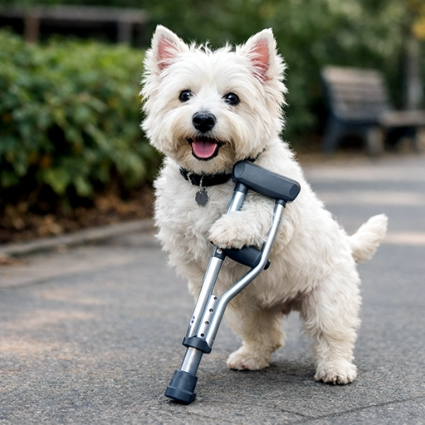
Orthopedic Problems in West Highland
White Terriers
Understanding, Diagnosing, and Treating Common Joint Issues in Westies
Orthopedic problems can affect a Westie’s comfort, mobility, and
daily joy. This guide helps owners recognize common joint, bone,
and spine concerns, understand diagnosis and treatment options,
consider possible costs, and know when to seek veterinary care.
Copyright © 2025
George R. Morgan