Copyright © 2025
George R. Morgan
Managing Brown Stains on Westie Fur
A white Westie coat looks beautiful, but anyone who has lived with
Westies knows it does not always stay bright white for long. Tear
marks, mouth stains, and brown paws can show up even when a dog is
well cared for. Some staining is mostly cosmetic, but sometimes it is a
clue that something else is going on. The goal should be to understand
what may be causing the discoloration, clean the coat safely, and know
when persistent or worsening stains deserve your veterinarian’s
attention.
Understanding Brown Stains Before Cleaning
Identify the Cause
Before trying to clean or lighten a stain, notice where it appears and whether your Westie has other symptoms. Tears, saliva, dirt, and
moisture can all discolor white fur, but persistent staining around the eyes, mouth, or paws may also accompany allergies, irritation,
infection, dental problems, blocked tear ducts, or repeated licking. If the staining is new, worsening, one-sided, smelly, itchy, painful, or
accompanied by redness or discharge, ask your veterinarian to identify the cause before treating it as a cosmetic problem.
Brown staining on the paws is often linked to repeated licking and saliva. Dirt and moisture may also contribute, but red, damp, itchy,
smelly, or constantly licked paws can point to irritation, allergies, yeast, pain, or another condition that needs veterinary attention.
Clean and dry the paws gently, and ask your veterinarian about persistent licking or skin changes rather than treating the discoloration
alone.
Choose Dog-Specific Products, Including Whitening Shampoos
Use only products clearly labeled and formulated specifically for dogs. Products made for people, cats, horses, or other animals may
contain ingredients, strengths, or directions that are not appropriate for a dog—even if the product appears similar or is described as
natural. This applies to whitening shampoos as well: choose one made for dogs and suitable for your Westie’s skin and the area being
cleaned. Follow the label exactly, keep the product out of the eyes and mouth unless it is specifically approved for those areas, and stop
using it if you notice redness, itching, swelling, irritation, or discomfort. If your Westie has sensitive skin, the staining is close to the eyes,
or you are unsure which product is appropriate, ask your veterinarian or groomer before applying anything.
Consider a Dog-Specific Stain Remover
If stains remain after gentle cleaning, first make sure any persistent or concerning discoloration has been discussed with your
veterinarian. You may then consider a stain remover formulated specifically for dogs and clearly labeled safe for the exact area you plan
to clean. Follow the label exactly, keep the product out of the eyes and mouth unless the label specifically permits use there, and stop
immediately if your Westie develops redness, itching, swelling, irritation, or discomfort. Never use bleach, whitening toothpaste,
essential oils, hydrogen peroxide, or other human whitening products on your Westie.
Gently Wipe Stained Areas
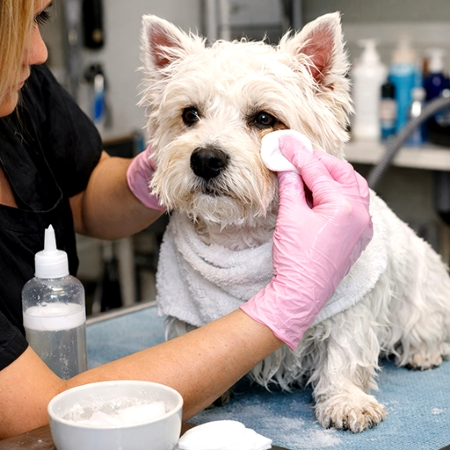
Use a soft, damp cloth or a wipe labeled safe for dogs to remove fresh tear or saliva residue. Wipe gently around the eyes and mouth
without rubbing the skin or touching the eye itself, then dry the area so moisture does not remain against the coat. Use a separate clean
section of the cloth for each eye, and contact your veterinarian if you notice redness, swelling, discharge, squinting, odor, or discomfort.
Trim Fur Regularly
Keeping the fur neat around the eyes and mouth can make gentle cleaning easier, but trimming close to these sensitive areas requires
care. If you are not comfortable doing it safely, ask a professional groomer for help.
Tips for Keeping Your Westie’s Coat Cleaner and Brighter
Maintain a Healthy Diet
A balanced diet and dependable access to fresh water support your Westie’s overall health, but changing food or supplements is not a
guaranteed solution for coat staining. If you suspect a food sensitivity, allergy, or nutritional issue, discuss it with your veterinarian
before changing the diet. Sudden diet changes or unneeded supplements can create other problems without addressing the real cause of
the discoloration.
Consider Filtered Water as an Optional Trial
Some owners try filtered water when staining persists, but water minerals are not the only possible cause and changing the water may
not affect the discoloration. Keep clean, fresh water available at all times, and discuss persistent eye or mouth staining with your
veterinarian before assuming tap water is responsible. If you decide to try filtered water, watch for any change over time without
delaying evaluation of irritation, discharge, dental problems, or other symptoms.
Groom Frequently
Brush your Westie regularly to remove loose dirt and debris, prevent mats, and make changes in the skin or coat easier to notice.
Grooming can help the coat look cleaner and brighter, but it will not correct staining caused by an untreated health problem.
Clean Eyes and Face Daily
Use the same gentle face-cleaning routine described above to remove fresh tear and saliva residue before it dries into the coat. Always
dry the area afterward and contact your veterinarian if eye or mouth staining is accompanied by redness, discharge, odor, squinting, or
discomfort.
Protect Against Environmental Factors
After walks or outdoor play, gently remove mud, dust, grass residue, and moisture from the coat and paws. Dry damp areas thoroughly,
especially between the toes, and avoid restricting normal activity simply to keep the coat white.
Consult Your Veterinarian
Consult your veterinarian when staining is new, worsening, persistent, one-sided, itchy, painful, smelly, or accompanied by redness,
discharge, repeated licking, dental symptoms, or other changes. Treating the cause matters more than lightening the fur.
Brown staining is common on white Westie fur, and gentle cleaning and regular grooming may help keep the coat cleaner and brighter.
The most important step, though, is understanding why the discoloration is happening. Treat new, worsening, itchy, painful, smelly, or
persistent staining as more than a cosmetic concern, and involve your veterinarian when needed. A perfectly white coat is not the goal at
the expense of your Westie’s comfort or health.