Copyright © 2025
George R. Morgan
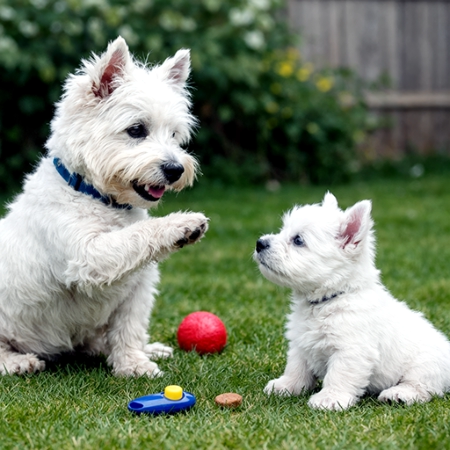
Effective and Humane Training for West
Highland White Terriers (Westies)
Westies are bright, confident little dogs with plenty of energy and a
mind of their own. That independent streak is part of their charm, but
it can also make training feel like a negotiation now and then. The
good news is that Westies are clever and learn quickly when lessons
are short, clear, and worth their attention. Patience, consistency,
praise, treats, and a little variety usually go much farther than
pressure or punishment. This guide covers the basics—from everyday
commands and socialization to common challenges and activities that
keep a busy Westie mind happily occupied.
Basic Obedience Training
Every Westie benefits from a few dependable everyday skills. Start with “sit,” “stay,” “come,” and comfortable leash walking. Choose a
quiet place with few distractions, and keep early lessons to about five or ten minutes. A short, successful session is usually better than a
long one that leaves both of you frustrated. Here are a few useful skills to begin with:
Sit
Hold a treat just above your Westie’s nose, then slowly move it back over the head. As the nose follows the treat, the bottom will usually
lower on its own. The moment your Westie sits, offer the treat and plenty of praise.
Stay
Ask your Westie to sit, hold your hand out with the palm facing forward, and say “stay.” Take one small step back. If your Westie
remains in place, return and reward the success. Build distance and time gradually so the lesson stays manageable.
Come
With your Westie on a leash, crouch down, say the name cheerfully, and follow it with “come.” Reward the approach with a treat,
praise, or affection. Practice first in a secure, quiet area, then add distractions slowly as the response becomes more reliable.
Leash Manners
If your Westie pulls, stop or calmly change direction instead of letting the pulling lead the walk. Reward the moments when the leash is
loose and your dog is walking near you. Walks can be exciting for a Westie, so steady practice matters more than expecting perfection
right away.
Keep Training Positive
Reward-based training teaches a Westie what you want by making good choices worthwhile. Use a small treat, cheerful praise, a favorite
toy, or a quick game—whatever your dog enjoys most. Reward the right behavior promptly, keep your cues consistent, and redirect
mistakes without scolding. Harsh corrections can damage trust and make learning harder. Some days will go beautifully and others may
not; celebrate the small wins and keep the experience encouraging for both of you.
Socialization
Socialization helps a Westie feel comfortable in the wider world. Gentle, positive exposure to different people, friendly animals, places,
sounds, and everyday experiences can build confidence and reduce fearful or reactive responses. Begin early when possible and follow
your veterinarian’s guidance about safe outings and vaccination. If your Westie is older, do not assume the opportunity has passed.
Progress may take more time, but patient introductions can still make a real difference. Whatever the age, keep new experiences gradual
and let your Westie set the pace.
Introduce Your Westie to People
Invite calm friends and family members to meet your Westie. Let the dog approach at a comfortable pace, and use treats, praise, and
gentle attention to make the visit pleasant.
Meet Other Pets
Introduce other dogs or cats carefully and supervise the visit. Choose calm animals when possible, provide room to move away, and end
the interaction while everyone is still comfortable.
Explore Environments
Visit different places such as quiet parks, neighborhood sidewalks, pet-friendly shops, or family homes. Add busier settings only when
your Westie is ready, and pair each new experience with reassurance and rewards.
Addressing Common Behavioral Issues
Westies are terriers, and terriers come with instincts, enthusiasm, and strong opinions. Barking, digging, or losing interest does not
make a dog “bad.” It simply means we need to understand what is driving the behavior and show the dog a better choice.
Barking
Westies often use their voices to announce visitors, unusual sounds, or simple excitement. Notice what triggers the barking, then calmly
redirect attention with a cue such as “quiet.” Reward the pause. Shouting usually adds more noise and may make the moment even
more exciting.
Digging
Digging comes naturally to many terriers. Plenty of exercise, sniffing games, and mental activity can reduce unwanted digging. If you
have the space, consider giving your Westie an approved digging spot and reward its use.
Independent Streak
A Westie may sometimes decide that your plan is less interesting than its own. Stay patient, keep the lesson upbeat, and change the
activity or reward if attention starts to drift. Working with that independent nature is usually more successful than trying to overpower
it.
Advanced Training and Enrichment
Once the basics are coming along, give that clever Westie brain something new to do. Tricks such as “shake,” “spin,” or “roll over” can
be fun for both of you. Agility, nose work, puzzle toys, treat searches, and interactive games provide healthy outlets for curiosity and
terrier determination. Rotate activities, keep them safe for your dog’s age and health, and make time each day for a little purposeful
play.
Training Tips and Best Practices
Establish a Routine
A familiar routine helps your Westie know what to expect. Try to practice at roughly the same time each day, and use the same cues and
house rules throughout the family.
Keep Sessions Short and Fun
Several short lessons usually work better than one long session. Stop while your Westie is still interested, and try to finish with an easy
success.
Avoid Punishment
Teach and reward the behavior you want instead of frightening or hurting your dog for getting it wrong. When a mistake happens,
calmly reset, make the task easier, and try again.
Stay Patient and Encouraging
Every Westie learns at a different pace. Notice the small improvements, celebrate them, and remember that a difficult day does not
erase earlier progress.
Seek Professional Help When Needed
If a behavior is persistent, frightening, or difficult to manage safely, ask your veterinarian or a qualified trainer who uses humane,
reward-based methods for guidance.
Training a Westie is less about winning a battle of wills and more about building a clear, trusting partnership. Keep the lessons kind,
consistent, and enjoyable, and give your dog plenty of chances to succeed. With time, patience, and a sense of humor, those spirited
Westie opinions can grow into good manners—and the training moments themselves can become some of the best time you spend
together.